



Can You Get a Second Passport for $100,000 in 2026? Costs, Fees and Realistic Options

second passport for $100,000

The advertised minimum is only the starting point. Here is how to compare second-citizenship programs, understand the additional costs and decide which route makes sense for your budget.

Information checked: 23 October 2026. All amounts are in US dollars unless indicated otherwise. Program fees and eligibility can change.

Quick Answer: Can You Get a Second Passport for $100,000?


Possibly, but a US$100,000 budget should not be mistaken for a guaranteed, all-inclusive citizenship package. In 2026, São Tomé and Príncipe has a published starting contribution of US$90,000 for a single applicant. That amount is below US$100,000, but government processing, citizenship documentation, professional assistance and individual expenses must still be considered. Depending on the applicable fee schedule, the complete budget can exceed US$100,000.

Nauru also advertises a temporary US$90,000 contribution for qualifying applications filed before 31 December 2026. Once its separately published official fees are included, however, it already exceeds the US$100,000 mark for a single applicant before professional costs. Vanuatu starts at US$130,000 under the standard Development Support Program, while established Caribbean contribution routes begin at higher levels.

At CITIVERSE, we recommend starting with two questions: What will the full application require financially? And what will the resulting citizenship actually offer you? The lowest entry figure does not necessarily provide the best fit for your current nationality, family or future plans.

Key Takeaways: Can You Get a Second Passport for $100,000?


  • US$90,000 can be a published qualifying contribution, not an all-inclusive price for a second passport.
  • São Tomé and Príncipe and Nauru sit close to the US$100,000 budget conversation, but their fee structures and conditions differ.
  • Vanuatu begins from US$130,000 for a single applicant; established Caribbean contribution routes generally start from US$200,000 or more.
  • Family composition, government due diligence, professional coordination, documents and payment stages affect the overall financial commitment.
  • Citizenship does not automatically provide residence rights in the US, UK or EU, nor does it change an individual’s tax residence.
  • A realistic application starts with an eligibility review and a tailored written cost estimate-not simply the lowest headline price.

Can You Really Obtain Second Citizenship for Under $100,000?


The short answer depends on what you mean by “under US$100,000.” If you mean the qualifying government contribution alone, at least one active program publishes a figure below that threshold. If you mean the complete price of becoming a citizen, the answer is much more restrictive.

Citizenship by Investment (CBI) is a regulated route through which eligible applicants may qualify for nationality by making an approved contribution or investment and meeting the country’s legal, documentary and due diligence requirements. The payment does not itself guarantee approval, and citizenship is granted by the state only after the required stages have been completed.

This distinction matters because promotional headlines often compare unlike figures: a minimum contribution in one jurisdiction, a government fee package in another and an estimated total in a third. It can make a program look less expensive than it will be for a real applicant.

A more useful approach is to identify the official investment threshold, understand which government charges sit outside that threshold and then assess the professional support and documentation your own case requires. That is especially important if US$100,000 is a firm financial limit rather than an approximate budget.

Cheapest Citizenship by Investment Programs in 2026: Official Starting Costs


The table below compares published starting contribution routes. It is a market overview – not a complete quotation or a ranking of the best passports. Most figures are for a single principal applicant and exclude additional government and professional fees.

Program

Official starting amount

Illustrative route

São Tomé & Príncipe

US$90,000

National Transformation Fund contribution

Nauru

US$90,000*

Naoero Treasury Fund contribution

Vanuatu

US$130,000

Development Support Program contribution

Dominica

US$200,000

Economic Diversification Fund contribution

Antigua & Barbuda

US$230,000

National Development Fund contribution

Grenada

US$235,000

National Transformation Fund contribution

Saint Lucia

US$240,000

National Economic Fund contribution

Saint Kitts & Nevis

US$250,000

Sustainable Island State Contribution

*Nauru’s US$90,000 figure is a limited-time contribution offer for qualifying applications filed before 31 December 2026, subject to official conditions. All starting amounts require confirmation immediately before application.

These figures illustrate why a simple “cheapest passport” comparison can be misleading. Some programs have a relatively low minimum contribution but limited travel access for the destinations a client actually needs. Others cost more but may provide a better family structure, established administrative framework or a more useful long-term result.

For readers comparing programs primarily around the US$100,000 level, the most relevant starting points are São Tomé and Príncipe and Nauru. Vanuatu is also worth understanding as the next contribution band, although it does not fit a strict US$100,000 ceiling.

Citizenship Options Around the $100,000 Budget


São Tomé & Príncipe: The Lower Entry Point


São Tomé and Príncipe introduced its Citizenship by Investment framework in 2025. Its National Transformation Fund contribution starts from US$90,000 for a single applicant and US$95,000 for a qualifying family of two to four. The family contribution band is important: it means the qualifying contribution does not simply multiply by the number of applicants.

The contribution is not the complete application budget. There are separately published submission and citizenship-document fees, and some available pricing schedules also reference an additional processing charge. Applicants should therefore confirm the current official fee treatment for their particular file before assuming that the program falls within a fixed US$100,000 total.

As a newer program, São Tomé and Príncipe should also be assessed for the time needed after approval for formal naturalization records and documents to be issued. A quoted decision timeframe is not necessarily the date when every family member has a passport in hand. The overall value depends on the applicant’s real travel requirements and intended use of the citizenship.

Read more about the São Tomé and Príncipe Citizenship by Investment program.

Nauru: Understanding the Promotional Price


Nauru’s Economic and Climate Resilience Citizenship Program offers a contribution route supporting national development and climate resilience. A US$25,000 limited-time reduction brings the published contribution for a principal applicant to US$90,000 for eligible applications filed before 31 December 2026.

The amount should not be presented as the full cost of citizenship. The program separately publishes application, due diligence, bank processing and passport charges. For a single applicant, those additional government charges already move the amount above US$100,000 before professional services or case-specific expenses are considered.

A promotional deadline should not determine the citizenship decision on its own. Applicants still need to assess eligibility, family inclusion, the official application process and present travel rights. In particular, Nauruan passport access should not be promoted using unsupported assumptions about visa-free Schengen travel.

Explore the Nauru Citizenship by Investment program for further details.

Vanuatu: A Higher Budget, Different Benefits


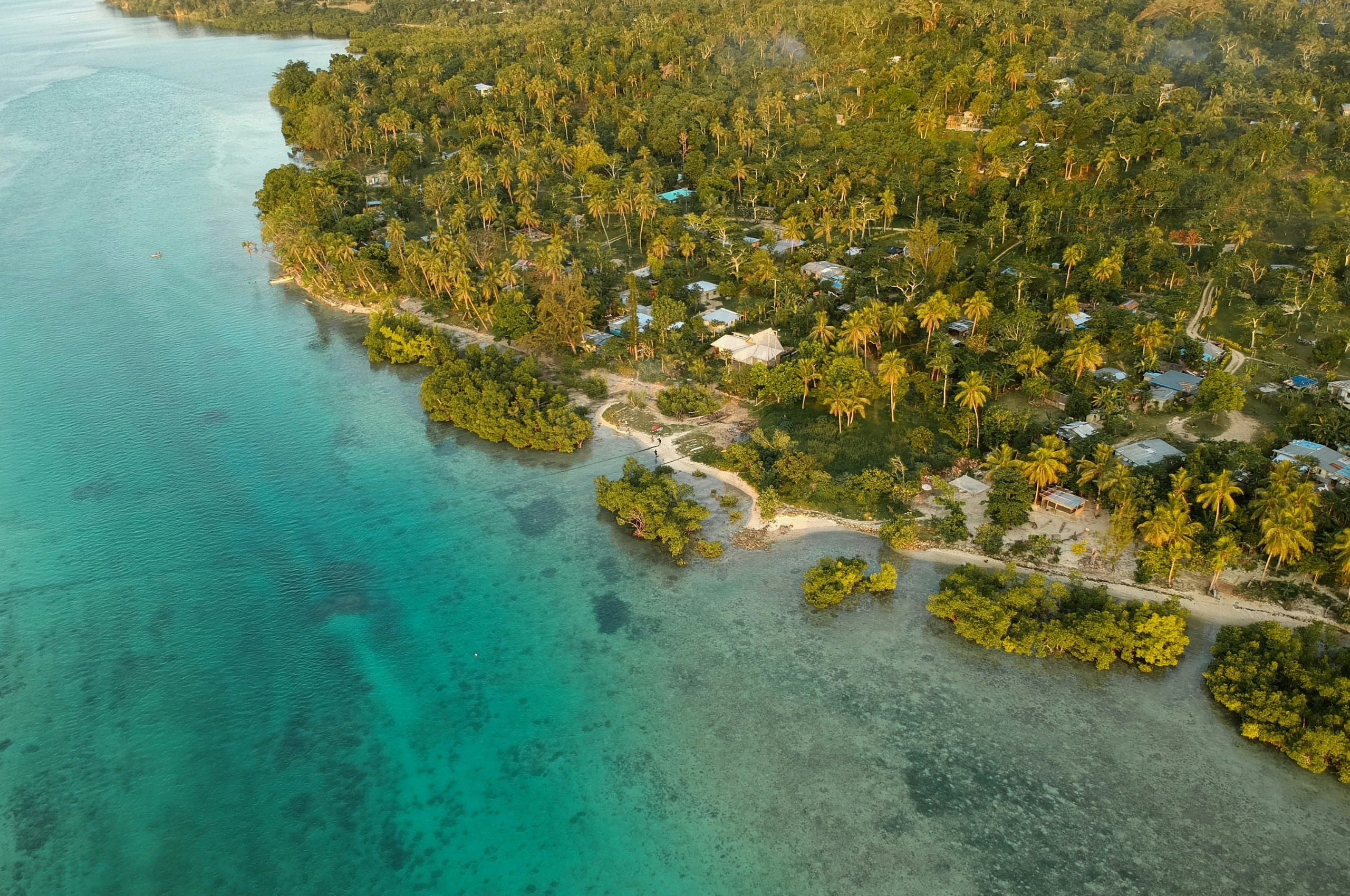
Vanuatu’s standard Development Support Program begins from US$130,000 for an individual, with published household contribution bands of US$150,000 for a married couple and US$180,000 for a married couple with two children. Financial Intelligence Unit screening and other applicable costs must be considered separately.

For investors who can consider a higher financial commitment, Vanuatu introduces a different conversation around processing, family planning and nationality diversification. But it is not an under-US$100,000 option, and it should never be marketed on the basis of its former visa-free Schengen access. The EU ended Vanuatu’s visa exemption.

Current biometric and identity procedures also need to be included in the application plan. The absence of a long-term residence requirement does not mean that every administrative step can necessarily be completed from home.

See our detailed guide to Vanuatu Citizenship by Investment costs, requirements and process.

Featured Citizenship by Investment Programs

Discover premium second citizenship opportunities in world-class destinations that offer exceptional lifestyle benefits

Vanuatu​

Minimum Investment: $130,000

Processing Time: 1–2 months

Grenada

Minimum Investment: $235,000

Processing Time: 3–9 months

Antigua & Barbuda

Minimum Investment: $230,000

Processing Time: 3–6 months

Saint Kitts and Nevis

Minimum Investment: $250,000

Processing Time: 3–6 months

Dominica

Minimum Investment: $200,000

Processing Time: 3–9 months

Saint Lucia

Minimum Investment: $240,000

Processing Time: 3–4 months

São Tomé & Príncipe

Minimum Investment: $90,000

Processing Time: 1–2 months

El Salvador

Minimum Investment: $1,000,000 in BTC or USDT

Processing Time: 2–3 months

Turkey

Minimum Investment: $400,000

Processing Time: 3–6 months

Egypt

Minimum Investment: $250,000

Processing Time: 3–6 months

What About Caribbean Citizenship by Investment Programs?


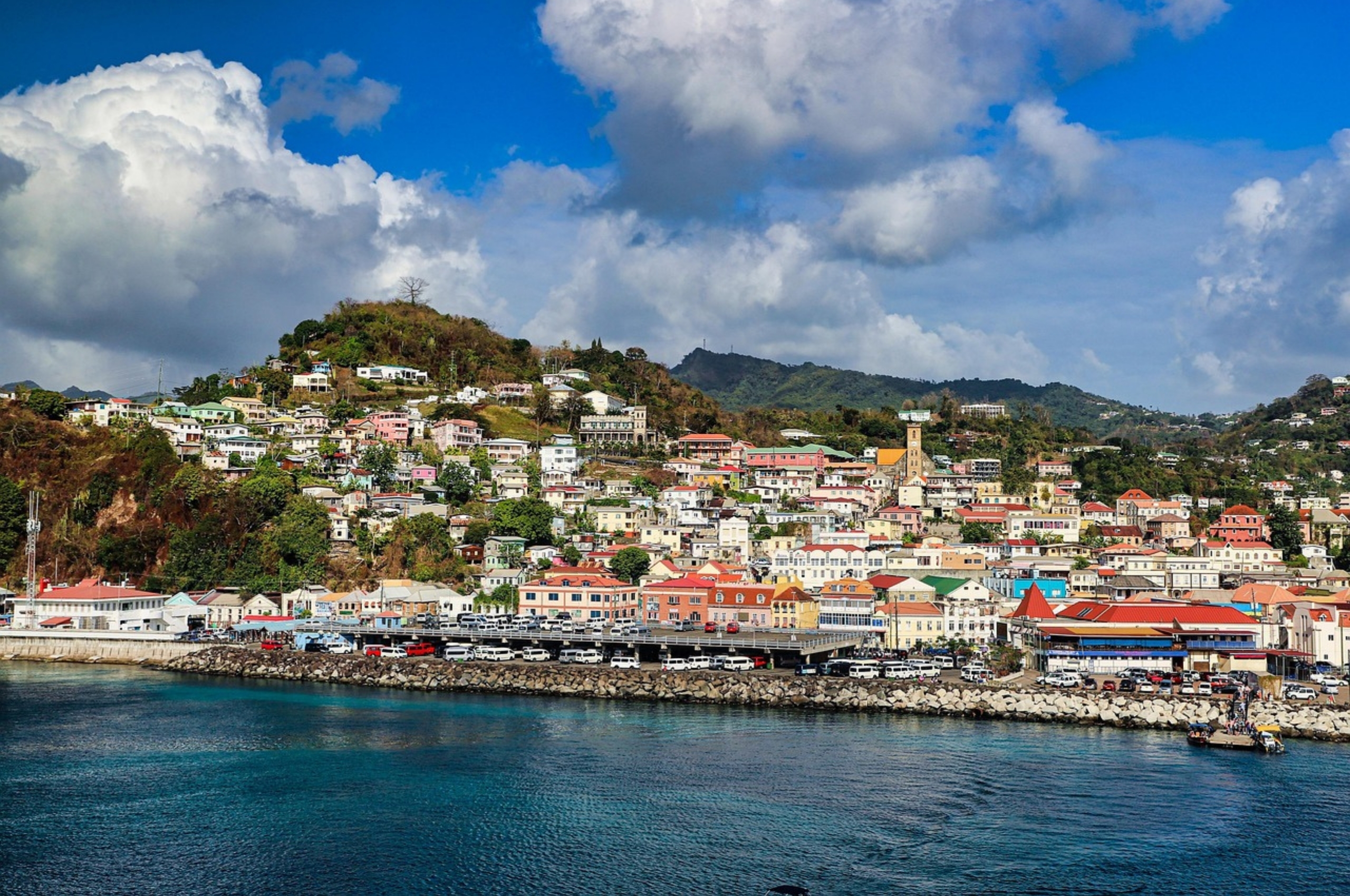
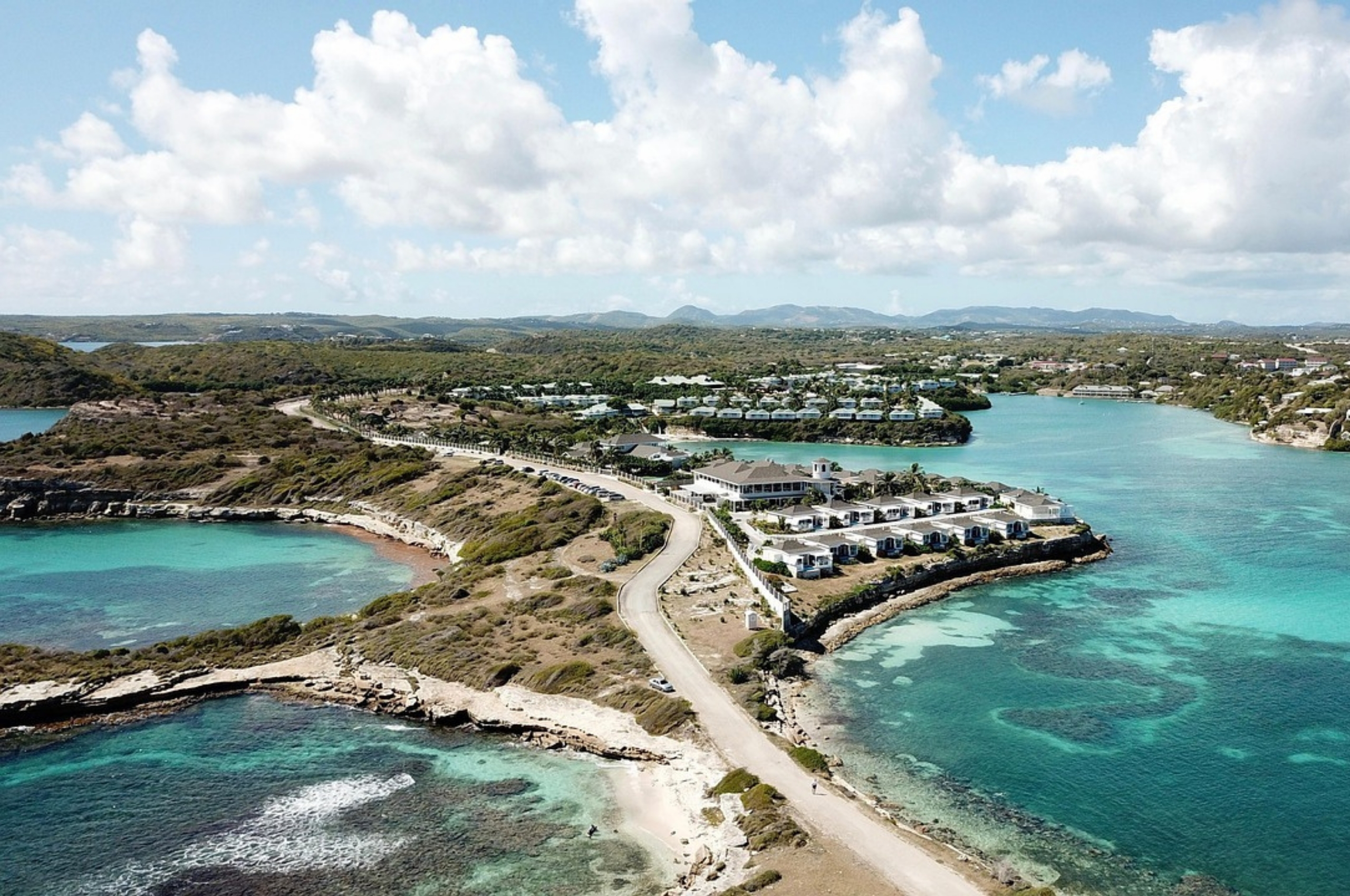
The Caribbean remains an important part of the citizenship market, although its established contribution routes generally operate above a strict US$100,000 budget. Dominica starts at US$200,000 for an individual through the Economic Diversification Fund. Antigua and Barbuda starts at US$230,000 through the National Development Fund; Grenada at US$235,000 through its National Transformation Fund; Saint Lucia at US$240,000 through its National Economic Fund; and Saint Kitts and Nevis at US$250,000 through the Sustainable Island State Contribution.

A higher starting figure does not automatically mean better value, nor is a lower figure automatically the right choice. Family contribution structures vary considerably. Some routes offer the same base contribution for a principal applicant and several dependants, while others apply different supplements and government charges.

For clients considering the Caribbean, the comparison should take account of citizenship-law stability, the applicant’s existing passport, the destinations that matter, family eligibility, due diligence and the long-term use of the nationality. Detailed Caribbean pricing is covered separately in our Cheapest Caribbean Citizenship by Investment guide.

What Does a Second Passport Actually Cost Beyond the Investment?


The qualifying contribution is often the largest component of a CBI budget, but it is rarely the only one. To compare programs fairly, we separate the financial commitment into three broad categories.

1. The qualifying contribution or investment


This is the amount prescribed for the chosen route. A development-fund contribution is usually non-refundable and does not create an asset. Other programs may permit qualifying real estate or business investments, but those routes can involve property transaction costs, holding periods, commercial risk and additional government fees. A recoverable asset is not the same as a guaranteed refund.

2. Government fees and mandatory application requirements


Published charges may cover filing, due diligence, financial screening, interviews, certificates, passports and identity documents. They can vary by age and family relationship, and some are due before any government decision. Where enhanced checks or additional documentation are needed, further costs and preparation time may arise.

3. Professional assistance and individual expenses


A properly prepared application can require legal and administrative coordination, source-of-funds documentation, translations, notarization, apostilles, certified records, banking support and travel or biometric arrangements. Professional service fees are separate from the qualifying government investment and depend on the work required.

The practical takeaway: published minimums are useful for shortlisting, but a decision should be made against a personalized written budget that identifies the route, every applicant, applicable government charges and the scope of professional support. CITIVERSE can help establish that framework before you commit to a particular citizenship option.
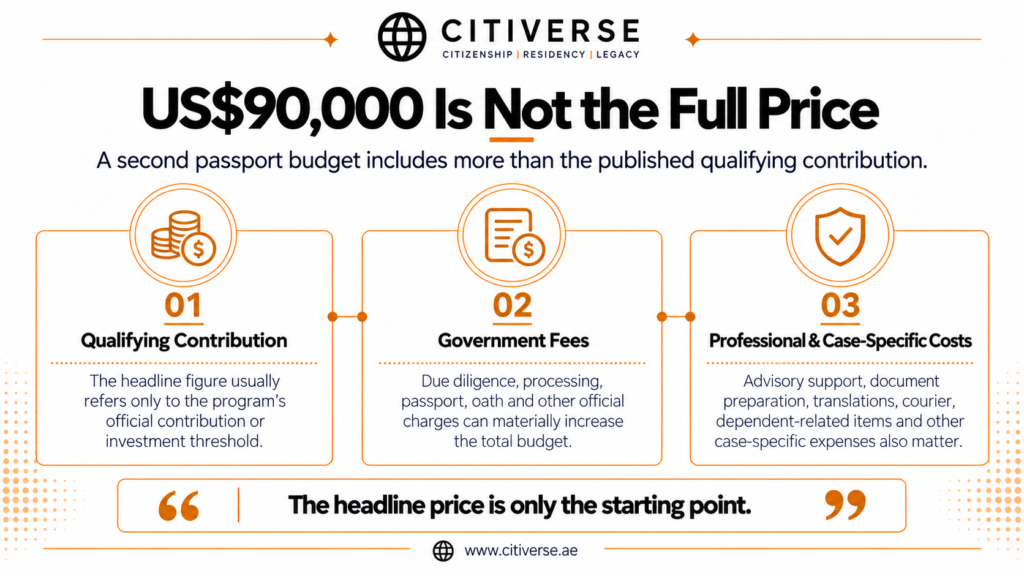
Infographic explaining the cost of a second passport in 2026, including qualifying investment, government fees, due diligence and professional expenses.

Second Passport Costs for Individuals, Couples and Families


Family composition changes the economics of Citizenship by Investment. That does not simply mean “twice the price for two applicants.” Each jurisdiction has its own household contribution bands, dependant definitions and additional charges.

A single applicant


For one person, the clearest comparison is between the published minimum contribution and the costs attached to completing the file. São Tomé and Príncipe’s US$90,000 contribution is the lower-entry reference point, but the additional application and professional costs are particularly significant if the budget ceiling is exactly US$100,000.

A couple


Some programs apply a contribution band that increases only modestly when a spouse is added, even though two people may incur separate identity, screening and document fees. São Tomé and Príncipe publishes a US$95,000 contribution for a qualifying household of two to four, while Vanuatu has a different fixed contribution band for a married couple. The number of applicants and their personal histories will still affect the complete quote.

A family of four


A family with two children should start with ages, dependency and future plans—not only today’s advertised family contribution. A child close to an age threshold, a student over 18 or a parent who may be added later can change eligibility and cost. Some routes offer attractive group contributions, but document and due diligence requirements may still apply separately to family members.

For each of these profiles, an individualized calculation is more useful than a generic “family passport package.” We assess the number and ages of applicants, their nationality, current residence, relevant documentation and the preferred program before presenting an expected cost structure.
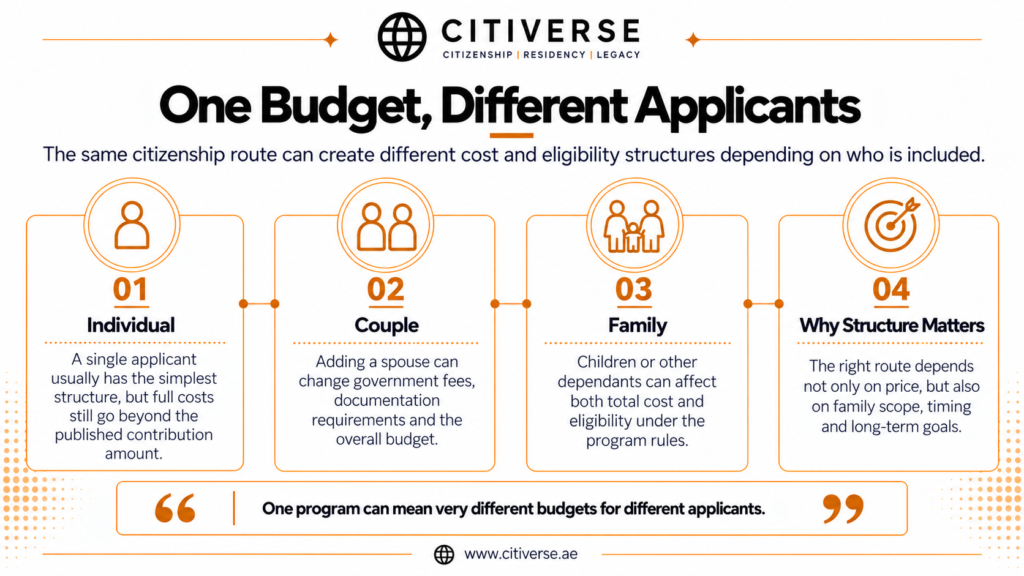
Infographic comparing second citizenship cost factors for a single applicant, couple and family, including government fees, dependants and eligibility requirements.

What Do You Actually Get for Your Investment?


The financial commitment only makes sense when the resulting nationality serves a real objective. The value of second citizenship can include passport diversification, an additional legal nationality, family continuity and potential changes to international travel flexibility. But these outcomes should not be overstated.

Travel access is specific to each passport and destination


Visa-free, visa-on-arrival and electronic travel authorization are not identical. The relevant visa rules can change, sometimes quickly. A passport may improve access to destinations that matter to one investor but add little to the existing travel rights of another. We recommend assessing the destinations you actually use rather than relying on a single passport-index score.

Citizenship is different from residency


A second passport does not automatically grant the right to live or work in the United States, United Kingdom or every country in Europe. Certain visa or treaty opportunities can be linked to nationality, but they remain separate legal processes with their own requirements. If the primary objective is a practical place to relocate, a residency route may be more appropriate.

A second passport does not automatically change your taxes


Tax residence is generally determined by applicable domestic rules and individual circumstances, not by citizenship alone. A country’s domestic tax regime should therefore not be treated as an immediate personal tax saving simply because its passport has been obtained.

If your objective is broader than travel flexibility, our guide to building a failsafe strategy with a second passport, second residency or both explains how different legal statuses can work together.

Is a $100,000 Budget Right for Your Citizenship Goals?


A second citizenship should be financially sustainable. If US$100,000 represents nearly all available liquid capital, additional charges or a delayed procedure may make a seemingly affordable program unsuitable. Applicants should also retain an appropriate reserve for business operations, family expenses, relocation and unforeseen obligations.

The right decision may therefore be to increase the available budget, adjust the timetable, consider a different route or focus on residency first. It may also be worth investigating descent-based citizenship or other lawful nationality pathways before committing to a substantial non-refundable contribution.

The same principle applies to applicants who can afford a higher program tier. Choosing an expensive option only because it appears more prestigious does not necessarily create better mobility or stronger long-term value. The program must fit the person.

For a broader discussion of affordability and applicant profiles, read Is Citizenship by Investment Only for Millionaires?. That guide focuses on who should consider second citizenship; this one focuses on what the actual financial commitment involves.

How CITIVERSE Helps You Choose the Right Citizenship Program


At CITIVERSE, our approach begins with your objectives, nationality and family structure. We help identify realistic programs, assess basic eligibility, map the supporting documents, consider source-of-funds readiness and compare the financial commitment required under different routes.

That includes reviewing the published qualifying contribution, identifying relevant government and due diligence charges, explaining where professional fees and individual expenses may arise, and outlining the steps and timing before the government makes its decision. We also consider whether the new nationality provides useful travel and family benefits compared with your current position.

For some clients, a contribution route with a low entry threshold is appropriate. For others, a more established program, a different investment structure or a residency-based solution may make more sense. We focus on helping you understand the options and the process – not simply the lowest number on a promotional page.

Know Your Budget Before You Apply

Every Citizenship by Investment application is different. CITIVERSE can help you compare suitable programs, understand the applicable government fees
and additional costs, and identify a route that fits your nationality, family circumstances, budget and long-term plans.


Disclaimer: This article provides general information only and does not constitute legal, immigration, investment or tax advice. Published fees and rules are subject to change. Citizenship is granted solely at the discretion of the relevant authorities following the required procedures and checks.

Frequently Asked Questions: Can You Get a Second Passport for $100,000 in 2026?

Can I get a second passport for US$100,000?

Some programs publish qualifying contributions below US$100,000, but that is not the same as a complete citizenship budget. São Tomé and Príncipe starts from US$90,000 for an individual, with additional government and professional charges. A fixed all-in ceiling of US$100,000 should be assessed with care.

There is no universally cheapest option for every applicant. São Tomé and Príncipe and Nauru both advertise a US$90,000 starting contribution as of October 2026, but the associated fees and conditions differ. Nauru’s figure is time-limited, and overall affordability depends on applicant and family details.

Usually not. The minimum contribution or investment is separate from government processing, due diligence, certificates, documents, professional coordination and other individual expenses. You should request a written cost breakdown for your exact application.

Family pricing depends on the selected country, number and ages of applicants, eligible relationships and applicable government charges. Some programs provide a family contribution band, but other costs are assessed per person. A personalized family quote is more useful than multiplying the single-applicant minimum.

Refund and payment rules vary. Some programs collect the principal contribution only after approval in principle, while initial filing and due diligence fees can be non-refundable. Payment stages and contractual terms should be confirmed before you engage or transfer funds.

No. Visa rules depend on the particular nationality, destination and current immigration policy. Vanuatu no longer benefits from its former EU visa exemption, and the UK has introduced visa requirements affecting some passports. Always check the specific destinations important to you.

Some CBI programs do not require long-term relocation, but applicants may still need to complete biometrics, interviews, identity verification, an oath or a short visit. These practical requirements differ by route and must be confirmed at the time of application.

A tailored assessment can identify relevant routes and published fees, assess who in your family may qualify, explain documentary and professional costs, and help you understand whether the expected citizenship is useful for your actual objectives before you commit significant funds.

CITIVERSE provides program guidance and application coordination. Citizenship approval is determined by the relevant authorities; legal, immigration and tax consequences depend on the applicable rules and the applicant’s circumstances.

Explore Citizenship & Residency by Investment
Programs by Citiverse

Discover premium citizenship and residency opportunities in world-class destinations, offering exceptional lifestyle benefits. Explore our overview brochure or continue reading below.

Meet the Citiverse team

Meet the specialists guiding Citiverse’s mission to connect global citizens with opportunities worldwide.

Cezary Zieniuk Citizenship by Investment

Cezary Zieniuk

Founder

Alexander Mabian Citiverse Citizenship by Investment

Alexander Mabian

Managing Director

Scroll to Top